Sequence Collect 2026: The CFO As the AI-buyer
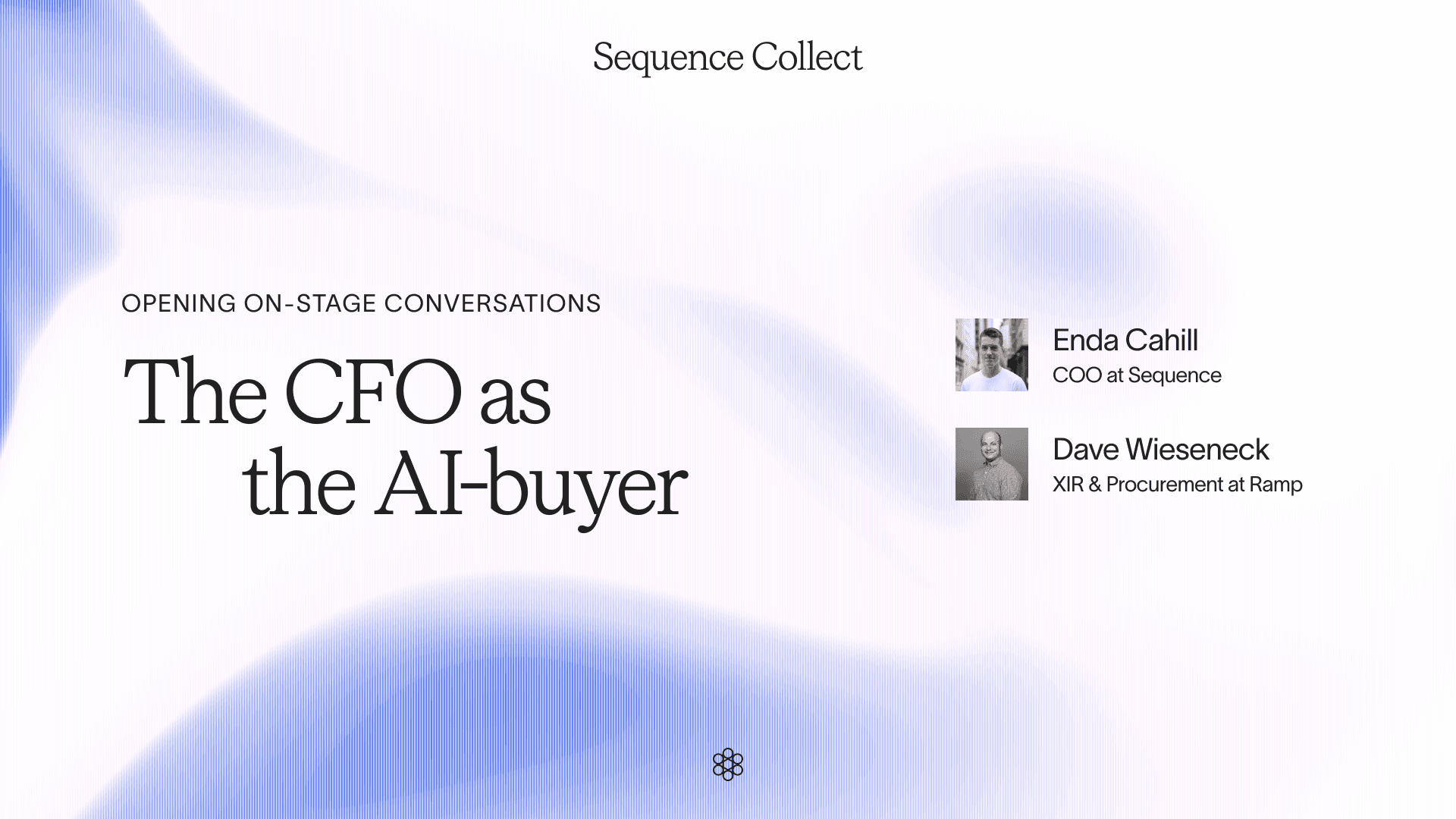
Dave Wieseneck, leads perocurement as Expert in Residence at Ramp, where the question has shifted from what software people can use to what software agents can use, and Enda Cahill is co-founder and COO of Sequence. At Sequence's Collect 2026, they opened the day on what it means for a CFO to buy for agents rather than users, from evaluating vendors on whether an agent can actually act inside them to why copying between two platforms means you have become the integration.
Buying software when the user is an agent
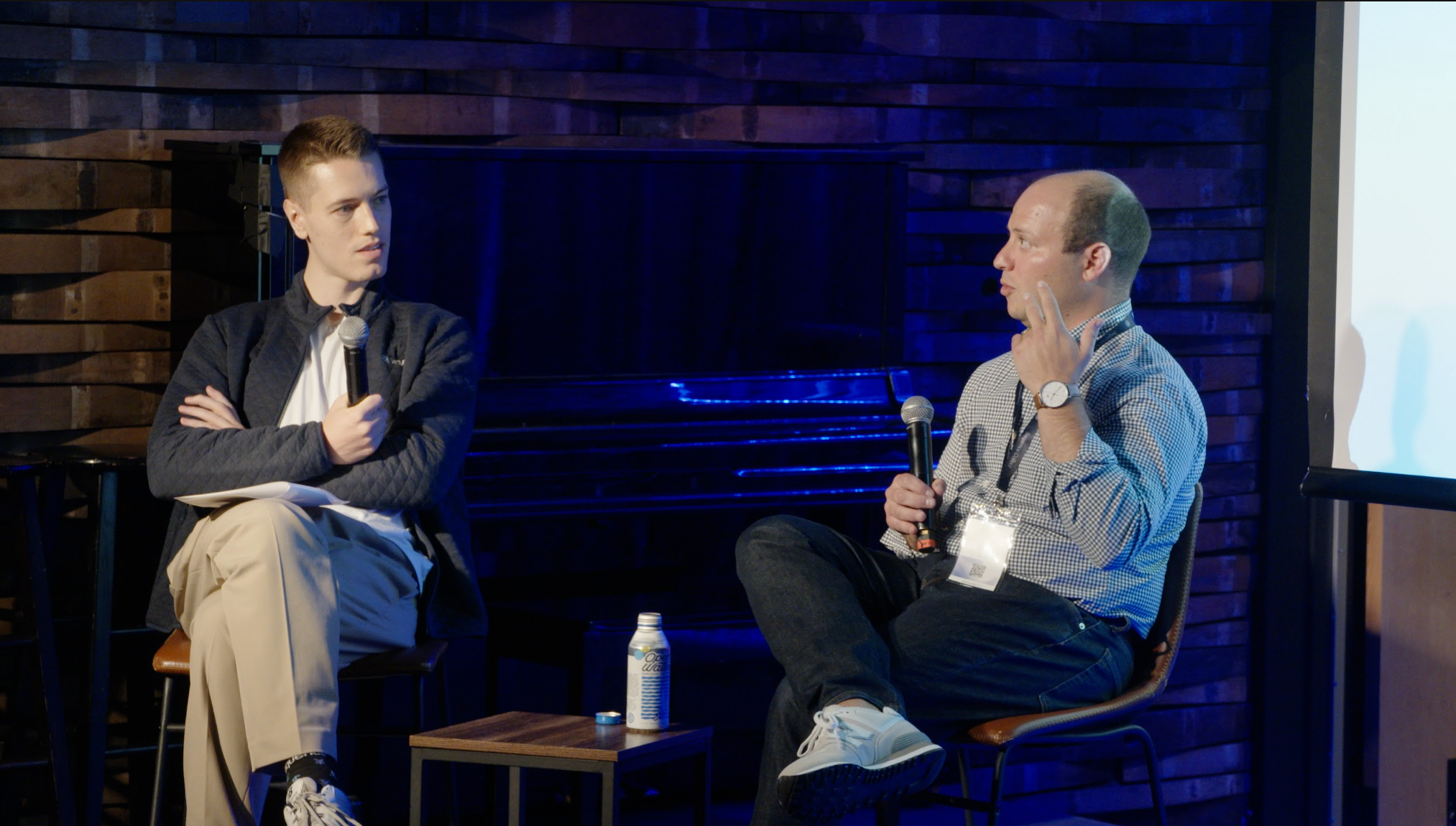
Dave is Expert in Residence at Ramp, where he also runs procurement. It puts him on both sides of the finance software market, buying tools for Ramp while working inside one of the largest finance platforms selling them.
At Collect 2026, he joined Sequence COO Enda Cahill to talk about how Ramp buys AI software, what the company learned from spending around $1 million a month with Anthropic, and why managing AI spend is becoming a different problem for finance.
The person signing a 3-year contract might not be the user
Ramp gets plenty of requests from teams wanting to buy software with AI attached. Dave separates them into 3 categories: 1) infrastructure that gives agents more capabilities, 2) products that can take meaningful work off a team, and 3) existing software where AI has been added without changing much beyond the price.
Ramp is seeing teams move from logging into applications themselves to working through an agent that interacts with those applications for them, handling the clicks and tedious navigation.
So if Dave is buying something on a multi-year contract today, he has to think about whether the product still makes sense when more of its users are agents.
Putting an agent in charge of a fantasy football draft
On Labor Day weekend, he gave an agent access to Yahoo Fantasy Football, some research and instructions, then texted with it while it researched players and made his picks. It worked, but the agent still had to navigate an interface designed for a person and click the same buttons a person would.
The procurement question is whether software will keep making agents take on the clicks and navigation, or expose the underlying actions directly through something like MCP.
That is starting to show up in how Ramp evaluates new software. Alongside product velocity, roadmaps and pricing, the team is using shorter contracts and proofs of concept to connect products to its own agents and see what happens before locking them in for years.
Ramp spent $1 million a month learning how to use AI
Earlier this year, Ramp told employees to use as many tokens as they could.
There were hackathons and usage leaderboards, and teams were encouraged to vibe code their own applications. At the peak, Ramp was spending around $1 million a month with Anthropic alone.
It got people building, but it also left finance with a massive bill and not enough information about what had produced it or what Ramp was getting back.
So the team built its own token spend management dashboard to break that bill down by person, project, team and model every day. Now, Ramp uses cheaper and open-weight models where they’re good enough, and has built infrastructure that can route a task across roughly 400 models.
A $10,000 spike tells you almost nothing
Once Ramp could see where the money was going, it ran into the next problem.
A $10,000 increase in token-spend could be an agent running in circles and producing nothing, useful work on an expensive model, or something Ramp should be spending even more on.
Dave gave the example of someone in customer support building an agent that costs several times their monthly salary but lets them do 10 times as much work. If that holds across the team, the question isn’t how to cut the cost. It’s whether Ramp should spend $100,000 on it.
Knowing what was spent, by whom and on which model gets finance halfway there, but they still have to know what came out the other side.
Book a demo