Sequence Collect 2026: Scaling the Finance Org from $10 to $100m ARR
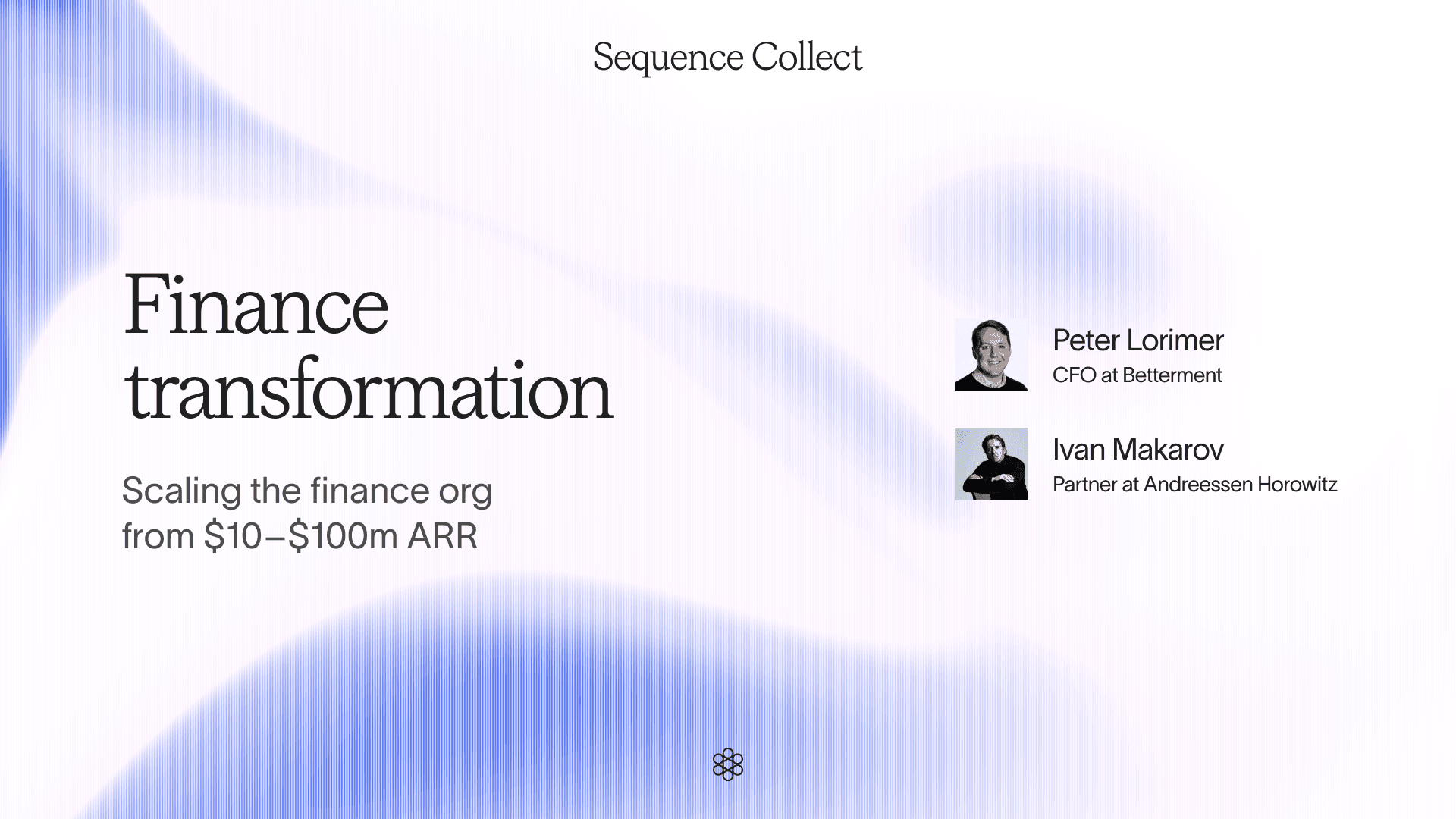
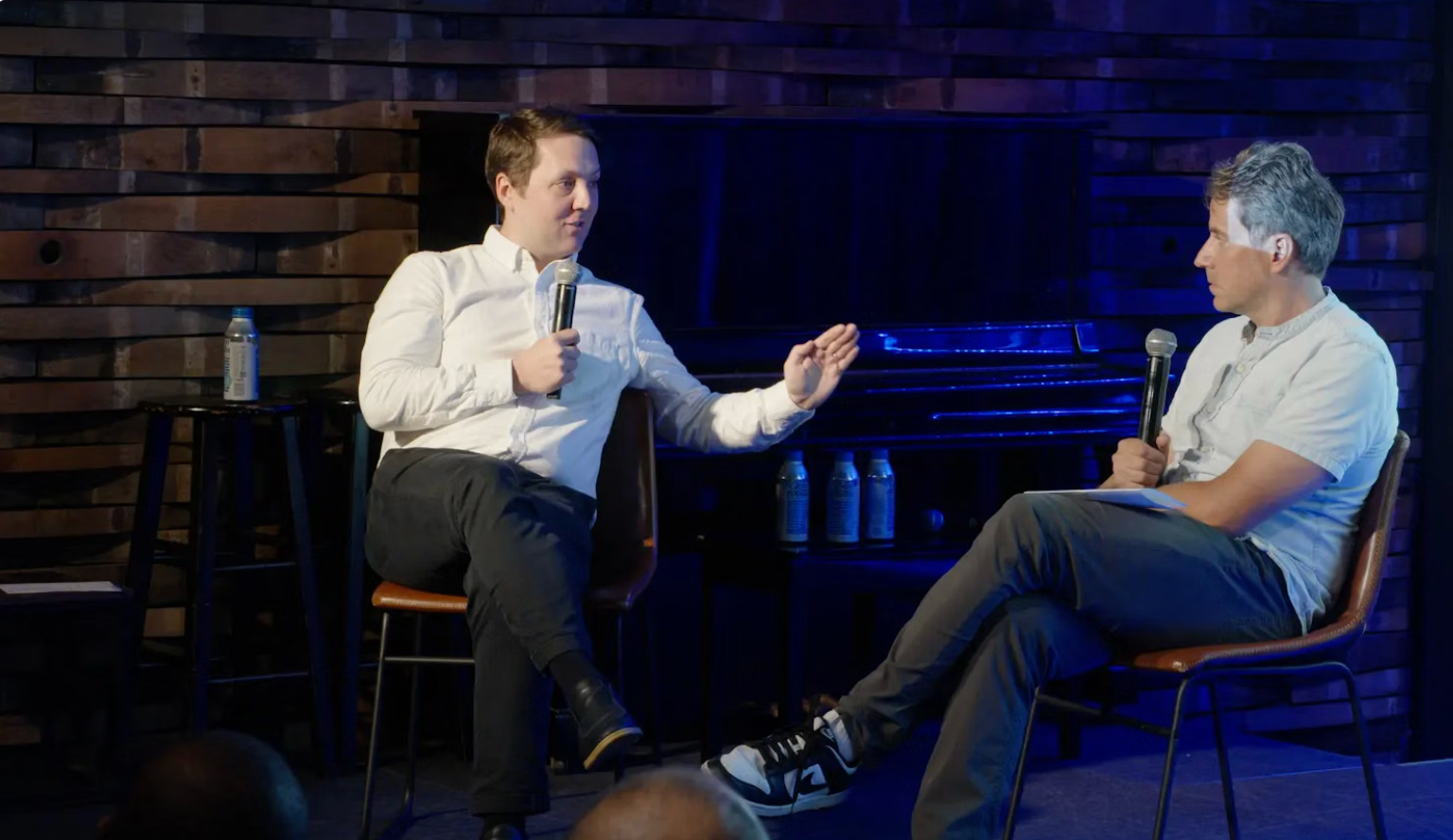
Peter Lorimer has spent 10 years building the finance function at Betterment and Ivan Makarov now advises finance teams across the a16z portfolio after doing the same at Webflow. On September 9th, at Sequence’s Collect 2026, they shared how the finance function changes as companies scale, from who you hire and how you plan to where you build vs. buy, and what AI is transforming across all three.
Hire for process over experience
When Peter joined Betterment 10 years ago, shortly after its Series E, there was one person in finance. Today, Betterment manages around $75 billion for roughly a million customers, and Peter oversees everything from accounting and FP&A to risk, procurement and RevOps.
Betterment has had data scientists move into FP&A, salespeople into the deal desk and people from trading into operations. The team Peter built doesn’t look like a traditional finance org because he prioritizes how someone approaches a problem over whether they’ve held that exact role before.
Ivan looks for the same thing when interviewing Heads of Finance across the a16z portfolio. The playbook someone used at their last company matters less than whether they can understand the business in front of them, see where a process will break before it does and work out what needs to change as the company scales.
Planning with fewer constraints
AI is changing how much work a finance team can get through without adding more people, especially in strategic planning and FP&A.
Peter sees teams building bottom-up plans faster, testing more assumptions and adjusting them as the business changes. At Betterment, new business lines and changes to the operating structure have historically meant rebuilding parts of the model in Excel when the existing planning system couldn’t accommodate them.
AI makes more of that work possible without adding another model, tool or person to manage it.
The Build vs Buy line keeps moving
Vibe coding and agents have made it much easier for finance teams to build something themselves. The Betterment team tried building more of its procurement workflow internally and found that getting something working was much easier than maintaining it.
At a regulated business, whatever gets built also needs to survive internal controls and an external audit. Peter’s happy to build proofs of concept and tools specific to Betterment, but still buys core systems where doing it internally means owning the maintenance and controls for years.
The same goes for what teams buy. He gave the example of an AP tool with an MCP that could return a vendor report through Claude, but took 30 minutes to do it. As agents, copilots and MCPs show up across finance software, what matters is what got faster, more accurate or disappeared from the workload altogether.
Token spend is becoming a finance problem
Peter had someone on his risk team spend around $20,000 in a month and saw it two ways. As CFO, he had to work out where the money would come from; as the leader of the function, he could see that the person might be building something valuable. Balancing the two is the challenge. When is that spend a useful learning cost and when is it just waste?
Ivan’s heard similar stories across the a16z portfolio, including a controller who spent $10,000 in tokens in a month without being able to explain what came from it.
$10,000 to $20,000 of token spend isn’t always money down the drain, but it becomes a problem when nobody can explain what came from it.
For Peter, that means the people using the tokens need to see the cost themselves. Betterment is pushing more of that ownership into individual functions, so a team deciding whether to spend another $20,000 on model usage can weigh it against another hire, another software contract or something else they could do with the same budget.
Ivan calls tokens “the new money.” They’re becoming another budget teams have to understand and account for, rather than a pot of experimental AI spend sitting somewhere with finance.
Book a demo