How airCFO helps startups build scalable back office operations: Lessons from 200+ early-stage companies
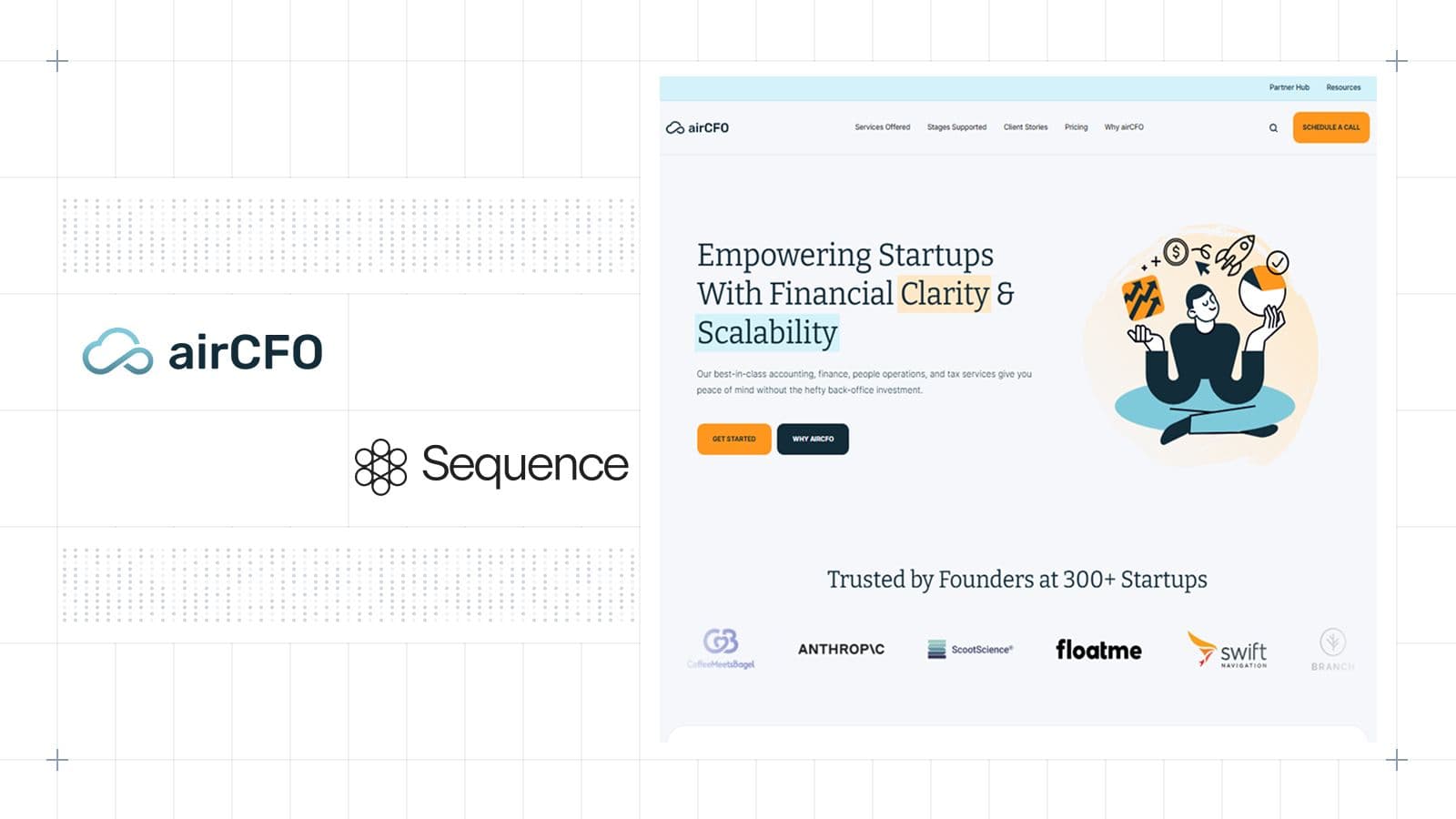
Most founders treat their back office as an operational necessity. Alex Wittenberg and his team at airCFO turn it into a competitive advantage. After supporting 200+ early-stage VC-backed startups, airCFO has identified the patterns that separate companies with scalable financial operations from those constantly fighting fires. We spoke with Alex about the mistakes that create operational debt, the tooling decisions that matter at each stage, and how AI is changing what finance teams actually do.
Start early or pay the price later
AirCFO works with companies across 4 stages of their Back-Office Flightplan framework: Launchpad, Launch, Iterate, and Scale (roughly pre-seed through Series B+). But they see the clearest wins when they start at pre-seed or seed stage.
"We find we have the most success with our clients when we're able to get in there in the earlier days to set up the foundational systems that will scale with them," Alex explains. "By Series A or Series B, companies have more institutionalized processes that we'd need to either revamp or work around."
The trigger is usually a fundraise. Companies either need to polish their systems before raising capital or realize immediately after closing that their back office can't support their next growth stage. Repeat founders behave differently. They bring in back office support much earlier because they've felt the pain of operational debt.
What operational debt actually looks like
When airCFO starts with a Series A or B company that skipped early back office investment, the same problems appear repeatedly. Alex calls it "the internal operations equivalent of technical debt."
"You make a Band-Aid fix here and it solves the problem in the short term. The team forgets that problem existed. But if you haven't solved the root cause of the issue, it's going to pop back up in a more painful way once there's more activity happening."
The usual suspects: improperly structured charts of accounts, weak AP or invoicing processes, and team members stuck in the wrong roles. airCFO runs a holistic assessment against their Back Office Flight Plan best practices, then builds a prioritized roadmap to fix the gaps.
The tooling decisions that matter
Choose well early and you won't need to rip things out later. At pre-seed and seed stage, Alex focuses on 3 core areas:
Banking: Tech-forward platforms like Mercury give founders easy setup and management without friction.
Expense management: Ramp has increasingly become a go-to choice for AP.
GL / ERP: QuickBooks remains the standard. 90% of US startups still use it, though newer players are gaining ground.
Billing / AR: Sequence
From seed to Series A, invoicing volume creates new pain. "We tend to see that being one of the most painful things for the startups that we work with when they hit that inflection point and actually start generating revenue. Tools like Sequence eliminate manual work when companies need to send invoices at volume monthly.”
The insight: modern platforms have features that grow with you. Pick thoughtfully and you scale without switching.
The blind spot that costs founders clarity
First-time founders consistently miss the same thing: the strategic insights hiding in their financials.
"They may be closing the books consistently but they may not have a framework in place for truly understanding the story behind the numbers," Alex explains. "It's about going 1 level beyond the numbers coming out of QuickBooks and putting those numbers into a more strategic context that allow them to make better tactical decisions."
airCFO helps companies spot trends, compare actuals versus budget, and create performance benchmarks so teams know whether they're on track or need to course correct.
When to bring in your first full-time finance hire
Fractional support works well through Series A and often Series B and beyond for most startups. The exception: if finance is core to your business strategy (you're raising both debt and equity, or you're a fintech where finance is part of the product), bring in a full-time leader earlier.
Around Series B, consider your first full-time finance hire. But skip the CFO title. "We typically recommend that that hire is maybe not a full-time CFO, but a Head of Finance," Alex says. "I think of a CFO as being someone who is capable of taking a company all the way through to a public offering or an acquisition."
Even after hiring full-time finance talent, fractional advisors provide value by handling core financial operations while the head of finance focuses on strategy.
How airCFO uses AI today
AirCFO takes a 2-pronged approach:
Off-the-shelf solutions: AirCFO created stage-specific implementation guides called All Systems Go tech guides with partners like Ramp, Mercury, and Rippling to capture every efficiency feature these platforms offer.
Internal tooling: AirCFO built The Mean Machine, a financial analysis tool that takes standard month-end reporting packages and generates CFO-level analysis.
"Our team would typically spend 1 to 2 hours a month on each month-end analysis," Alex explains. "Now with this tool, they can shift that time from literally typing out the analysis to reviewing it and fine-tuning it and then helping the client understand what that analysis says about how they should operate moving forward."
The 3 skills that will define future finance roles
As AI automates routine tasks, finance professionals need to level up in 3 areas:
Systems architecture: Designing scalable systems that produce reliable, accurate financial results. "Without a strong data foundation, it's like onboarding a new employee without any training and expecting them to succeed," Alex notes.
Data analysis: Blending outputs from disparate systems to extract business health signals and insights for better decision-making.
Cross-functional partnership: Working with department leaders to identify key drivers of success and improve those metrics over time.
"This is a vision of what a world looks like where accounting and finance professionals are actually elevating themselves within an organization as opposed to being automated away," Alex explains. "If we can free up their time from monotonous work, they can take on higher value things and really be that strategic partner."
Finance operators should learn to code
Alex's most opinionated take: finance professionals are naturally positioned to leverage AI-powered coding tools.
"The practice of building a piece of software is actually quite structurally similar to the process of building a financial model," he explains. Both involve datasets in tables, business logic that manipulates them, and outputs in the form of projections or analysis.
He runs quarterly hack weeks, clearing his schedule after major model releases to build internal tools. The results include a VC fundraise toolkit that matches startups with best-fit investors and The Mean Machine for financial analysis.
AirCFO is launching AirCFO Labs to give select clients early access to AI tooling, plus a Vibe Coding for Operators training program to help operators build their own internal tools.
"More operators and finance professionals should experiment with AI-powered coding because I think they will be pleasantly surprised about how naturally it comes to them once they pick up some of the new terminology," Alex says.
The takeaway
The startups that win don't treat their back office as an afterthought. They invest in scalable systems early, choose their technology stack thoughtfully, and bring in the right expertise at the right time.
As AI reshapes finance operations, the most successful operators will embrace these tools to elevate their work from data entry to strategic partnership with founders and leadership teams.