Sequence 2026 Opener

Our second Collect conference brought 100 Finance and RevOps leaders to New York on 9 September. Enda opened on how Sequence went from a usage-based billing engine in 2024, to quote-to-cash in 2025, to an agentic revenue platform in 2026.
We ran our second annual Collect in New York on 9 September, a year on from the first one in San Francisco.
Over 100 people came, all finance and RevOps leaders at the fastest-growing SaaS, AI and fintech companies in the market, plus consultants, fractional CFOs, advisory firms and accounting firms.
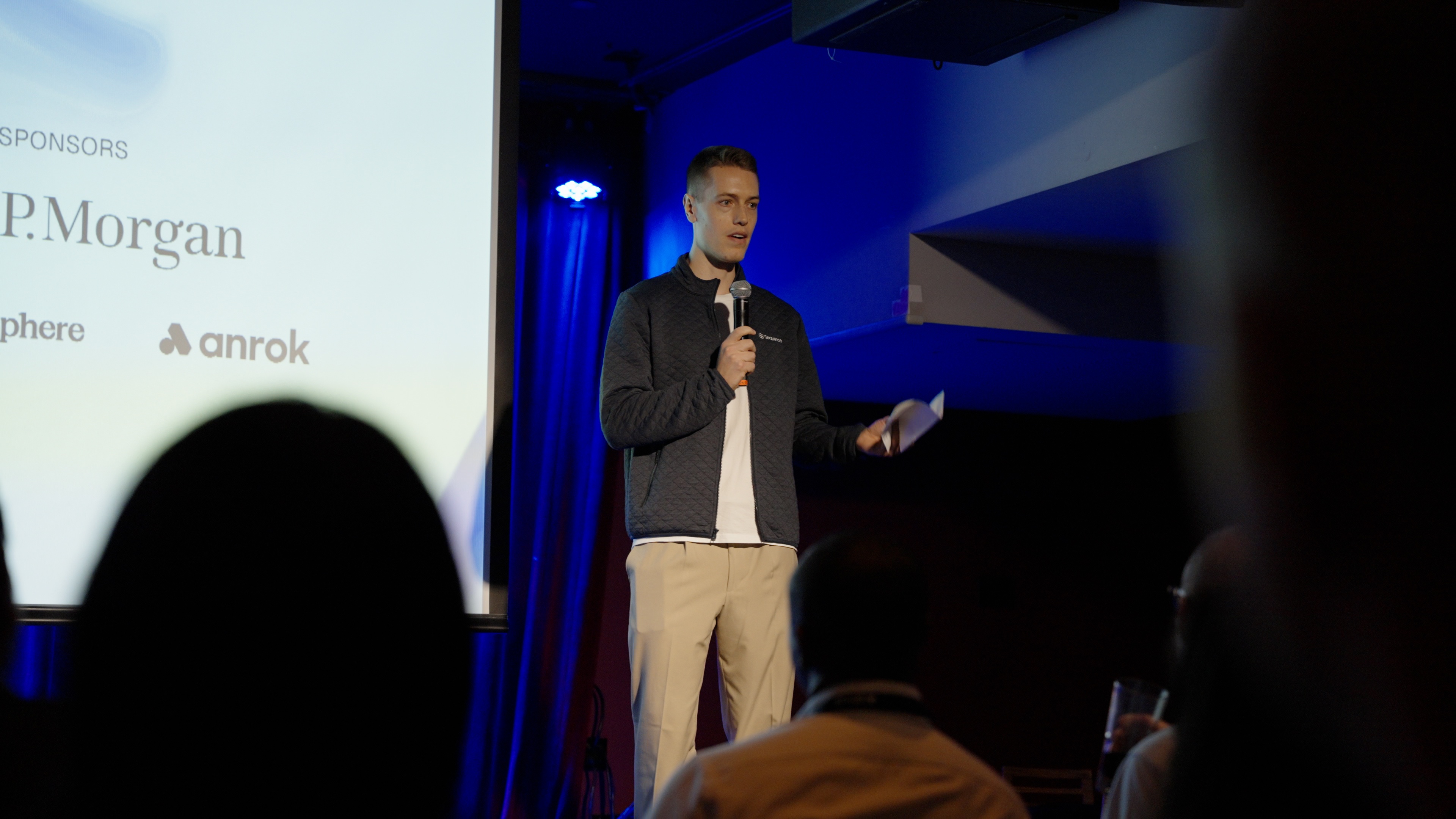
I opened the day by thanking the sponsors who made Collect the success it was: JP Morgan, PwC, Abacum on FP&A, and Sphere and Anrok on sales tax. We were selective this year and picked 5 companies we work very closely with.
Thank you to the speakers
We had an incredible speaker lineup this year.
Dave Wieseneck of Ramp opened with me on the CFO as the AI buyer. Anne Giviskos, ex-CAO at Navan, and Samantha Zytko of PwC talked about going public in 2026 and Navan's IPO. Vishal Thakkar of CPA.com, Jordan Fladell of Aprio and Elinor Litwack of GRF CPAs & Advisors covered AI in CPA practices. David Farber of Tennr and Daniel Wheller of Hebbia went deep into deterministic versus AI. Closing the day, we had Peter Lorimer of Betterment and Ivan Makarov of Andreessen Horowitz talking about scaling a finance org from $10m to $100m ARR.
The roundtables were a new addition this year and were lead by industry leaders like Nicholas Rudder from Sphere, Ken Yoon from Cross River, Fahad Jamal from Merge and Nathan Cull from Abacum led them.
What changed since Collect 2025
Since the last Collect we closed our $20m Series A, we now process billions in annual invoiced revenue, and in the last month alone we signed 30% of the CARR in the business.
We have moved up-market sooner than we expected. The risk aversion that would typically slow a company like Sequence down at the mid-market and enterprise end has shifted quite meaningfully. Buying a legacy or incumbent solution is no longer seen as the safe bet by finance operators. In a lot of deals now, boards and CEOs are putting pressure on teams to ask why they are not buying more AI-first software, and why they are not scaling with a leaner team.
More companies are charging on usage, and the commercial pricing models underneath those contracts keep getting more complicated. That is why so many companies need a flexible billing and revenue engine like Sequence.
2024, the billing engine
We launched the most robust billing engine on the market, built for B2B teams with usage-based pricing at their core. At the time that meant fintech, SaaS and API companies, maybe 20 to 30% of SaaS charging on API calls.
Now it is every AI and SaaS company. If you are building with AI, your token and credit costs push you towards consumption-based pricing whether you planned for it or not, and your pricing model has to shift again as agentic features on your platform grows.
2025, the quote-to-cash evolution
In 2025 we kept hearing the same line: “You have solved billing, but our sales team keep going rogue.”
Invoicing and collections were in a good place for 90% of contracts. The remaining problems sat upstream, with custom sales orders. GTM teams were signing custom contracts, and finance was landed with a signed PDF and the job of working out what had been agreed and whether it could be billed with the current system. Every custom SKU created by a rep had to be rebuilt by hand in the billing engine before a single invoice could go out and a lot of the times it couldn’t be done.
So we unified the sales to finance handoff, with flexible CPQ and billing products on one platform that use the same product catalogue.
2026, the agentic revenue platform
An agent is only as good as the context it has. For revenue, that context sits between the CRM and the ERP, and in most enterprises it is spread across 4 or 5 systems. These point solutions layer AI on top of them and finance teams end up with 4 or 5 MCPs and no single record of what was sold and what is billed.
Sequence now runs the full revenue workflow with a CPQ or AI Contract Agent, metering, billing, collections, reporting and revenue recognition. Agents automate the manual work around AR, with guardrails and auditability. Watchtower, our human in the loop interface, is where you review, approve and audit everything the agents do before it goes in front of a customer.
We have been very deliberate about where agents should go. I have yet to meet a finance operator who says an 85% correct invoice run is fine by them.
For workflows like invoicing and revenue recognition, you need a clear audit log, a clear rationale in the platform that's visible to the user, and an easy way for a human to oversee and step in. It is worth calling out that 100% of our customers who have been through an audit have passed.
Contrast those with payment reminder emails, or reviewing a contract before it goes into the platform, or matching up 90% of ACH transactions with the associated bank payment. If you get a draft that's 95% good enough for an email going out to a customer, and you can approve it before it sends, that's usually a substantial uplift on what happens today manually.
The line between deterministic and AI got a full session of its own later in the day when I sat down with the CFO of Tennr, David Farber along with VP of Business at Hebbia, Daniel Wheller.
Who uses the Sequence platform
A lot of the companies making the news run their revenue on Sequence.
Cognition announced their $2b raise the same week as Collect. Stripe's two largest acquisitions to date are both Sequence customers, which we take some humor in, since 50% of our customers move over from Stripe Billing. Bridge renewed recently and OpenRouter has been using Sequence to scale their B2B usage-based contracts since 2025.
Book a demo