
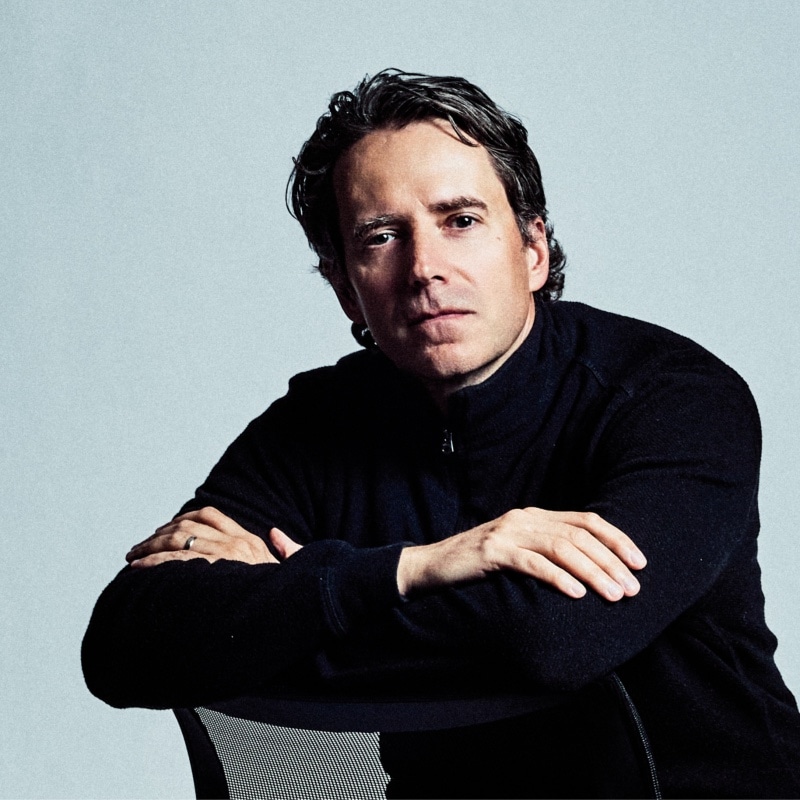

Ivan Makarov is a Portfolio Finance Partner on the venture team at Andreessen Horowitz. Before a16z, he spent 4 years leading finance at Webflow as their first finance executive, as the company grew from 100 to more than 650 employees and helped raise over $250 million across its Series B and C.
He also held executive roles at SmugMug and Flickr, after starting his career at PwC and EY. Ivan now leads technical interviews for Head of Finance / CFO candidates in the a16z portfolio and recently co-published an article on how the CFO role is quickly evolving in the AI era.
“What do the first 6 months on the job look like?”
I run technical interviews for finance leaders, or even just the first finance hire candidates across our portfolio companies, and when I ask that question, I’m not looking for a specific answer.
I’m listening for whether they’re already thinking about the nature of that business, the state of the business, and where they can contribute. By the time they meet me, they already have gone through several interviews with the company, so they should have a formed point of view.
“What I’m listening to is a coherent story that ties more closely to what the business needs are rather than a playbook. ’Cause we still have a playbook, which is you sort out your data, you sort out your accounting, and then maybe you replace your ERP or billing system, and then you start building FP&A functional. I think all that is out the window and often not what the business actually needs first.”
The traditional finance playbook assumed there was a sequence to follow, where you sorted out the books and data, put the right systems into place, then started building the team around you. But today’s new finance products are interrupting that sequence.
A lot of our finance leaders now, even at companies already at scale, are a team of one.
The playbook assumed you had six months before you started building the team. That window has stretched to a year or more, sometimes much more, because the products and AI have changed what a single person can cover.
In the space of just a couple of years, everything has changed and what you hire for, when you hire, and who you hire first are all different.
Three areas I focus on
I used to evaluate candidates on pedigree and domain experience. They came from good companies, held good titles, showed a clear progression. These still matter, but they’re no longer the sorting function.
The three things I look for now are EQ, IQ, and tech savviness. Two years ago tech savviness was nice to have. Today it’s a qualification.
“Every finance hire from now on should be able to wire two systems together with an API call, write SQL, and prototype an automation. If they can’t, they’re the wrong hire.”
The interview signal I trust most is when a candidate can name their stack from memory and tell me what they replaced, why, and what they would do differently. That’s someone who has been in the system and not just managed the people who were in the system.
One of the biggest shifts I see in CFO searches across our portfolio is candidates coming from large public companies who expect to build the same kinds of organizations they managed before.
But at the fastest growing companies right now, finance can run at well under 5% of total headcount, even at large scale. We see this in so many companies we work with.
New finance leaders are joining companies with the expectations that they build and operate the company for far longer on their own.
FP&A and strategic finance are the same job now
On my team at Webflow, and at most companies of that era, you had 2 separate groups. FP&A people who were exceptionally good at Excel, sat in meetings with department heads, and managed budgets. Then strategic finance, which focused on growth, pricing and packaging, market expansion, and M&A, and functioned more like an internal McKinsey.
The distinction between the two is disappearing. You can’t be a really good FP&A professional without being really good at technology, and also thinking about the growth. At the same time, strategic finance people who used to get hired for organizing large amounts of data no longer have that as a differentiator.
“Claude is good at that, and Codex is good at that. So now they have to learn how to navigate the relationships, how to navigate the executive office.”
The blending is happening the same way product and engineering are blending across the portfolio. PMs are shipping things and engineers are PMing things themselves. Maybe the dedicated FP&A business partner gets hired later. Maybe strategic finance as a separate function gets punted.
Either way, the person you do hire needs to be able to do both. The latest term floating around for this is a ‘financial engineer’, which I think is roughly right. Someone who can build systems, tie data together, build dashboards, and maintain a model, and who also has the judgment to sit across from an executive and push back on a budget.
The first hire changed
Finance teams sometimes started out with a controller. Now there are better systems for the close and better outsourced accounting firms. For a lot of companies, the urgent need is rarely the books anymore and data is priority No. 1.
If I were going back into an operating seat today, my first hire would be a financial engineer who can stitch data together, build reporting, build budgets, and build planning.
My first move would no longer be to look for someone who is exceptionally good at modeling. I can still model myself and I am honestly not very good at Excel anymore. But AI is, and I still remember enough about what decent models look like to tell when one is right.
“Today, I’d hire a fraction of the people I did in my prior roles.”
With these systems, finance leaders can stay alone longer because the surface area they can cover on their own has expanded.
Give your team room to experiment
I talk to a lot of finance leaders on a regular basis, and I keep hearing the same thing: we’ve learned more in the last year or two than in the previous 5 to 10, and we are having the most fun we’ve had in a very long time, maybe since college. The common theme is it happened because we got access to AI tools and new products and said this is our time to learn, even if there is no immediate output.
The companies in our portfolio where AI adoption is taking off started with a few curious people who built something, and the rest of the team watched them do it and spread from there.
If I’ve learned one thing from watching this from my point of view, it is that companies getting the most value from AI and agents have a common trait of hiring curious people who can dive in, learn and build on their own.