What changed in SaaS and AI pricing in the past 12 months
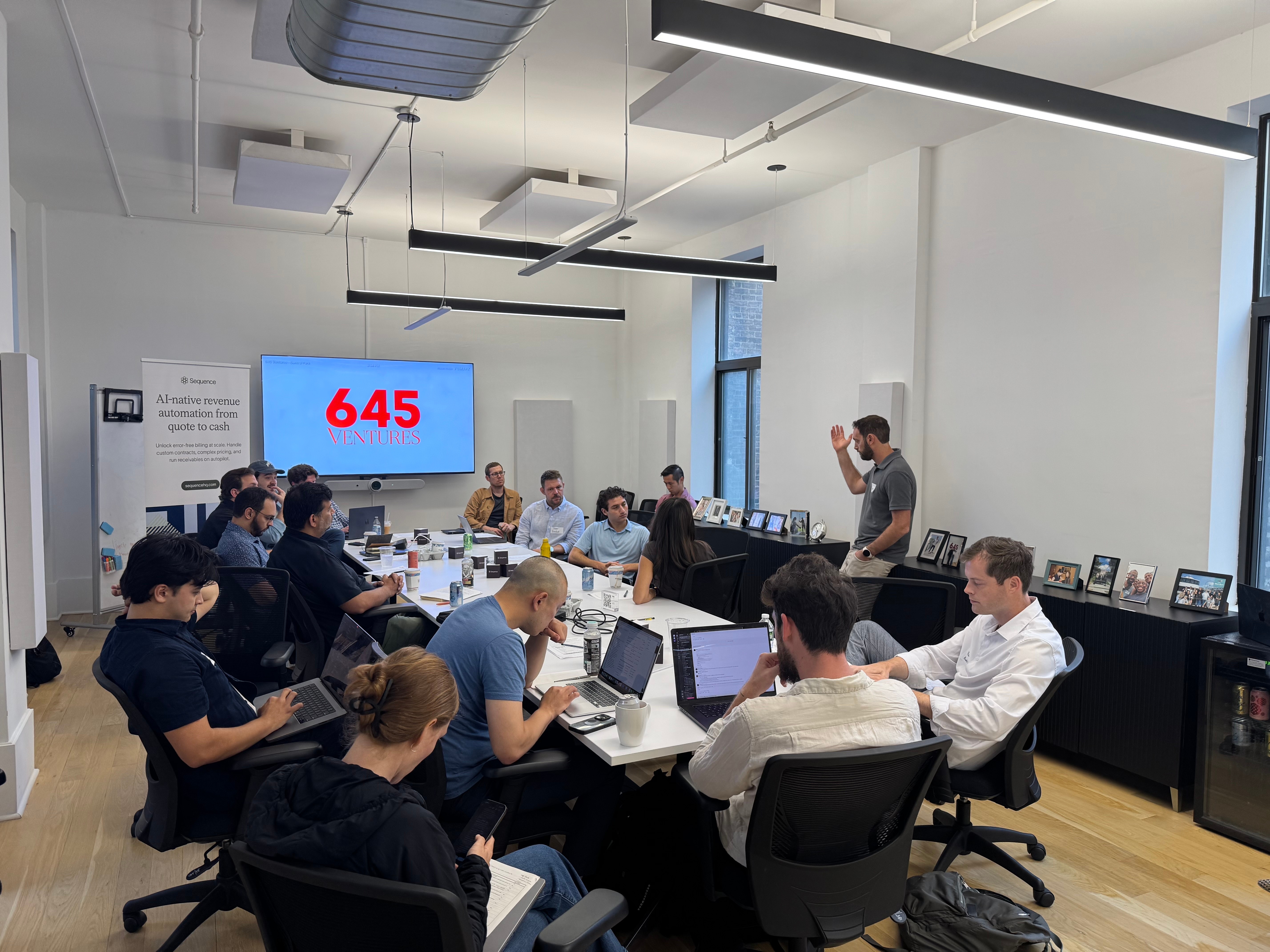
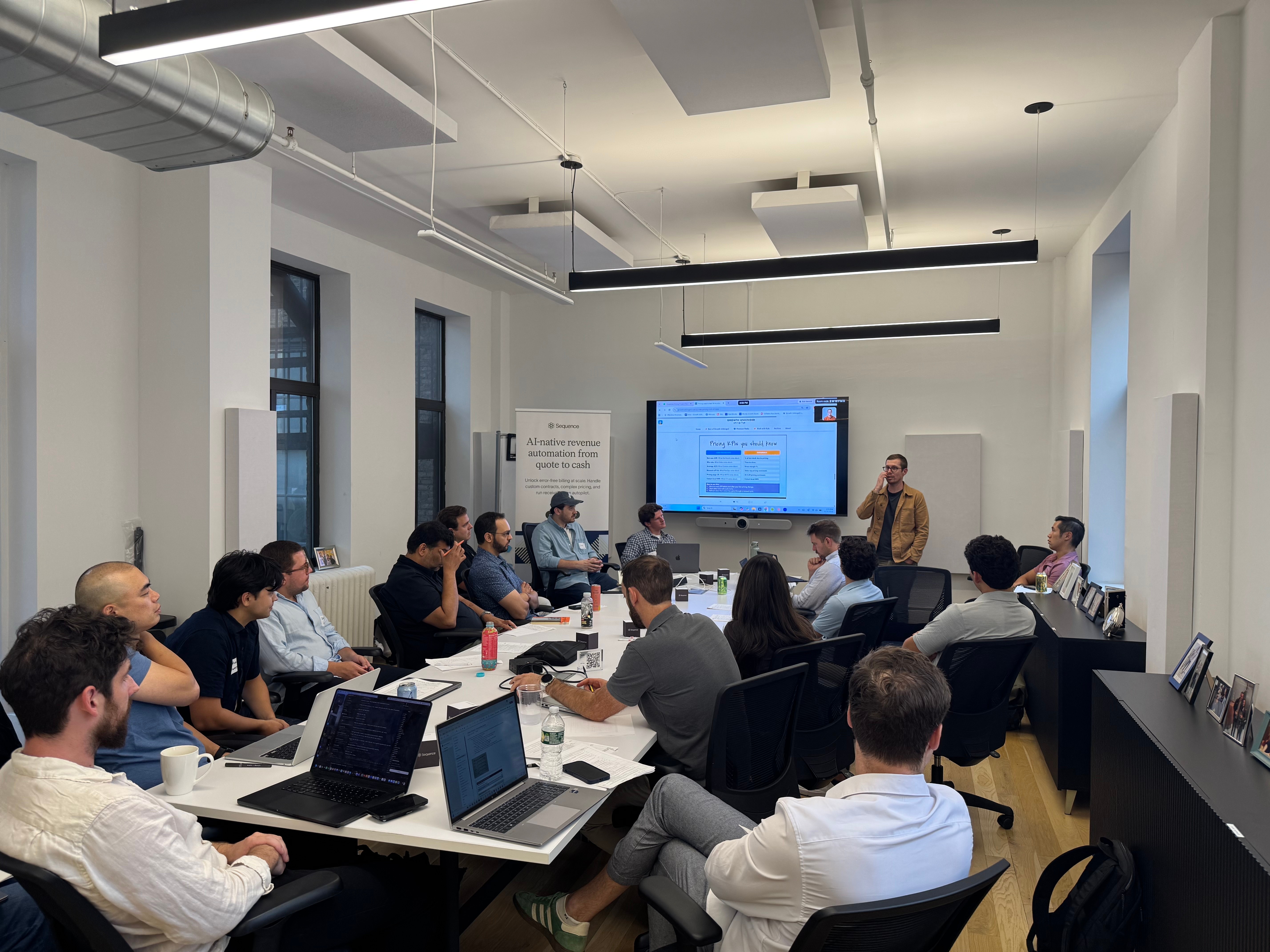
Last year, the most common prediction in Kyle Poyar's monetization survey was that companies would move to outcome-based pricing. A year on, adoption is flat. We sat down with Kyle again in New York, a year after we published ‘The new rules of B2B pricing’ to see what has changed in a private pricing bootcamp.
The move towards hybrid.
Outcome-based pricing was about 5% of the market last year. It was also the number one prediction for where the market was heading. It didn't move and our own data puts it at roughly 10% of companies today.
What exploded instead was hybrid pricing models with credit models, usage models, platform fees with consumption on top. The market went sideways into complexity rather than forward into outcomes.
Kyle uses a four-part test for whether outcome pricing can work at all:
Consistency: your customers all want the same outcome.
Attribution: you can prove your product drove it, not that it helped a bit.
Measurement: you own the source of truth, and the customer believes your data.
Predictability: the customer can estimate the bill before they sign.
Most companies fail at least one. And failing predictability is expensive one. You end up with two unpredictable numbers instead of one, a usage metric and a success metric, which is harder to budget for than plain consumption.
The clean cases tend to be found money. One chargeback recovery company takes 25% of whatever revenue it recovers for a merchant. There's no SaaS fee. One outcome, unambiguous attribution, measurable in the customer's bank account, and roughly predictable from historical win rates. It also never feels like a cost, because the customer is up on the deal either way.
Investors sentiment.
The biggest barrier to usage-based pricing last year was investor sentiment. VCs disliked the unpredictability and questioned whether consumption revenue counted as real ARR.
That reversed. Investors are now pushing portfolio companies towards usage. The pitch is that tokens are growing 10x a year or more, so attaching your model to token consumption gives you growth you don't have to earn.
Pricing changes are no longer a one-way door
A widely read finance newsletter argued recently that moving to usage is irreversible. Kyle used to think so too.
He compares the shift to going from on-prem to SaaS. You have to add customer success as a function. You have to keep earning the revenue. There's no shelf to hide on, because nobody pays you $10,000 a month for seats they never log into. Product features become monetisable when they drive consumption. All of that changes the operating model, not just the price list.
The part that changed is the idea that you only get one shot at it. That's 2021 thinking. Almost every company Kyle meets now runs several models at once. A platform fee with usage upside. Seats plus consumption. One product on consumption and another on a flat fee, aimed at different segments. One enterprise incumbent runs five separate pricing models for its AI products, and a recent acquisition adds a sixth.
Pricing has stopped being a once-every-few-years overhaul. It's an agile function now, which is mostly a question of whether your infrastructure can keep up.
Multiple pricing models
29% of companies now let customers choose between pricing models, up from 21% a year ago. That sounds like the market is heading for a pricing menu. Kyle doesn't think it is.
Too much choice overwhelms buyers and wrecks sales enablement. What works better is a primary model and a secondary one, with clear rules for when a rep pitches each.
The good version of this is segment-driven. One automation company priced on a blend of seats and automation volume. It worked well in enterprise. In small business it did the opposite. Those customers had one or two seats, real consumption, and no appetite for overage surprises, so they under-deployed the product and churned anyway. The fix was two flat tiers at $500 and $1,000 a month, capped on users and differentiated on capability. Average selling price went up. Retention went up a lot. The costs were containable because small customers only consume so much.
They never offered that model to enterprise. They don't even advertise it there.
Credits are not the endgame
Kyle calls credits a lifeline. He doesn't think they're the endgame, though he'll admit they've lasted longer than he expected.
Credits work when you're a customer's primary vendor. They break when everyone does it. Once a buyer has two dozen vendors selling credits, they're pre-committing spend across all of them, with a different definition of a credit at each one, and no good way to decide where the AI budget should sit. Routing through MCP scrambles the estimate again. Should that consumption run through the vendor, or straight through the model provider?
The pendulum is shifting from token maxing to ROI maxing, and credits at every vendor won't survive it.
One route out is a platform fee plus pass-through, which Kyle frames as the Costco model. You charge properly for the membership and pass the goods through near cost. One go-to-market platform is doing this now, marking up data and model access by around 20% and keeping its real margin in platform features. The message to the customer is clean. We're not gouging you on tokens. Use the expensive model, the cheap one, or your own. Our value is the harness around it.
That's a hard shift internally, because it means 80% margin on the core and 20% on the pass-through instead of 80% on everything.
It also points at where the upside goes next. Companies are starting to set AI budgets at team level and let products compete for that spend. Foundation model providers can win it. So can traditional software vendors, and they have two advantages: they hold the context, and they mix intelligence with cheaper automation, which lowers total cost per task. The story is that you can reach the same models through us, at half the cost per task, because our harness manages the spend. It's a disruptive pitch. Almost nobody is telling it well yet.
Selling work
The strongest version of outcome pricing right now is software companies going after services budget.
Services spend dwarfs tech spend. If you can deliver the work with technology, you can price far below an incumbent consultancy and still charge several times what the software alone would fetch. Usually it takes forward-deployed engineers or solutions people up front, with more of the process automated over time.
One e-commerce testing platform is doing this now. Their customers rarely have a specialist to run tests or dev resource to build them. So the new offer is an audit, a set of recommended tests, two tests a month delivered end to end, and a money-back guarantee if the upside doesn't land in three months. They can charge four to five times what they get for the technology.
You see the same shape outside tech. An immigration law firm charging only for successful cases, with the price on the website, converts better than one that quotes on request.
AI joined the buying committee
Agents are already buying in narrow cases. AI coding tools recommend which database or messaging vendor to use. Two business banking providers have shipped agent credit cards. But the bigger shift is upstream of that.
Buyers are using ChatGPT and Claude to shortlist vendors, weigh pros and cons and work out pricing. Commercial-intent queries on ChatGPT grew about 50% year on year. Kyle's own subscriber data went from 5% arriving via AI engines at the start of the year to over 15% now, climbing weekly. Direct referral clicks barely register, because people read the answer and then go to Google.
He ran a study on the top hundred private cloud companies, asking each major AI engine to evaluate them on pricing. Own pricing pages were rarely the primary source. The best performer was a fintech infrastructure company whose docs were cited more than its own pricing page. The top third-party sources were Vendr, G2 and Reddit.
The failure mode is worse than invisibility. He tested a prominent AI-native legal tech company and got a hallucinated range of $100 to $2,500 per user per month, plus a strong editorial line that the pricing was opaque, expensive and complex. That's now part of how the brand shows up in a buying process.
The fix looks more like brand and product marketing than SEO. Say who the product is for, why it beats alternatives and how to choose a plan. If you don't publish prices, say so in your docs, so the engines have a canonical answer to cite instead of inventing one.
Pricing mistakes
Kyle's worst pricing messes used to be companies that hadn't touched pricing in years. One portfolio company went six years without a change. By then there was no infrastructure to make one, no decision process, and a customer base with no tolerance for it.
The new mess is the opposite. Some AI-native companies change pricing so often that he can't establish what the current price is. One made a pricing change on a call and tagged an agent in Slack to update the pricing page. The page changed. The in-app messaging didn't. Neither did the emails or the internal documentation.
Speed is the right instinct. Speed without a record of what changed and when means you can never answer the only question that matters, which is whether the change helped.
That's the part we care about at Sequence. Whatever combination you're running, seats with overages, a drawdown wallet, a platform fee with pass-through, your billing system should let you change the model and then measure what happened.